In the artistic research project With the Thing, Henrika Ylirisku and Tomi Slotte Dufva explore the human entanglement with digital devices and digital data. They seek ways to transform dimensions of more-than-human relationality, which are typically difficult to notice or beyond human perception, into a form accessible to human sensory experience. Drawing from queering as a praxis, they challenge the habit of treating digitality as an uncomplicated, human-governed realm separate from organic, bodily life.
They craft a device that transforms a mixture of human and non-human sourced digital data sequences into a form of beating vibration. The code sequences that the device runs in random order consist of, e.g., human heart rate data, COVID-19 vaccine statistics from different countries, hit-points of different Pokémon characters, nuclear fallout statistics from the Chernobyl disaster of 1986 in different countries, and CO2-transfer data gathered from a specific pine and birch tree at the Hyytiälä forestry field station.
The device, the “Thing,” becomes a strange actor, questioning the border between the human and non-human, and asks how we relate to otherness.
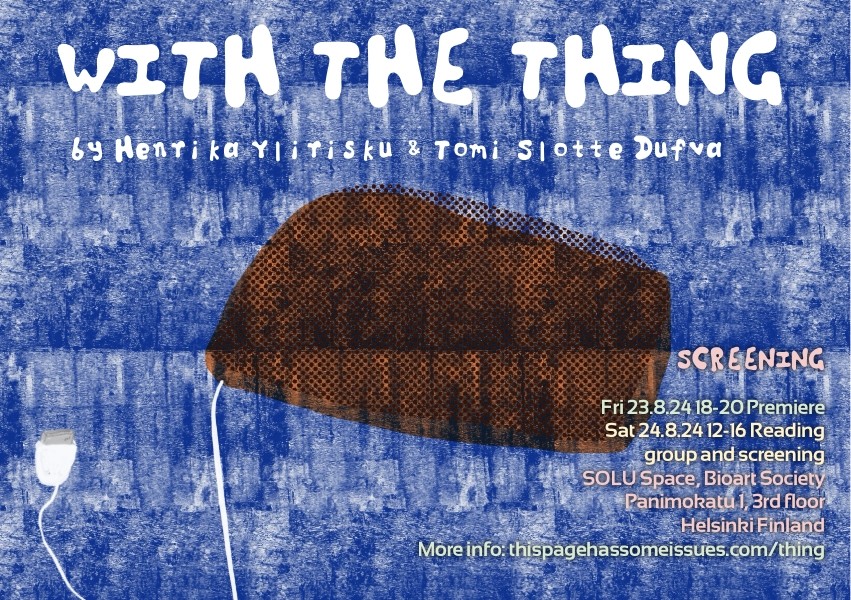
Artwork:
Henrika Ylirisku & Tomi Slotte Dufva (2023). With the Thing. HD video, stereo sound. Duration 5:00
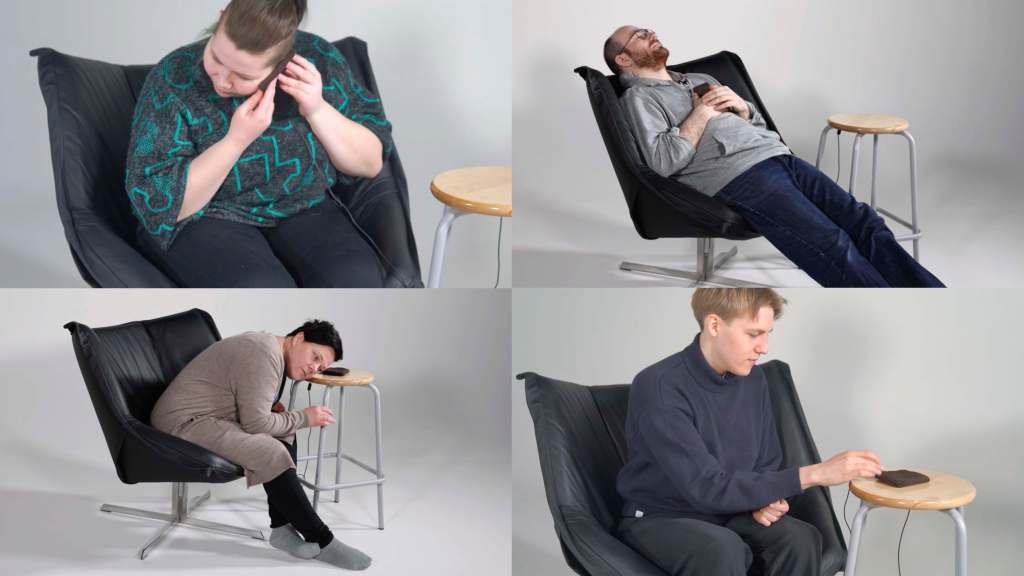
Voluntary testers are spending time with a strange device that is pulsing. Each of them have their own way of contacting the device and exploring it. The testers seem to be unsure of what they are dealing with. The soundtrack consists of a throbbing pulse of the device, with the tempo changing irregularly. The 8-channel video is divided into two screens, each of which is divided into four video fields displaying altogether eight persons simultaneously engaging with the device.
Publication:
Ylirisku, H., & Slotte Dufva, T. (2023). “You really are a thing!”: Queering relations with the more-than-human world. In B. C. Fredriksen & P. I. Haukeland (Eds.), Crafting relationships with nature through creative practice (pp. 176–194). Scandinavian University Press. https://doi.org/10.18261/9788215069197-23-10

